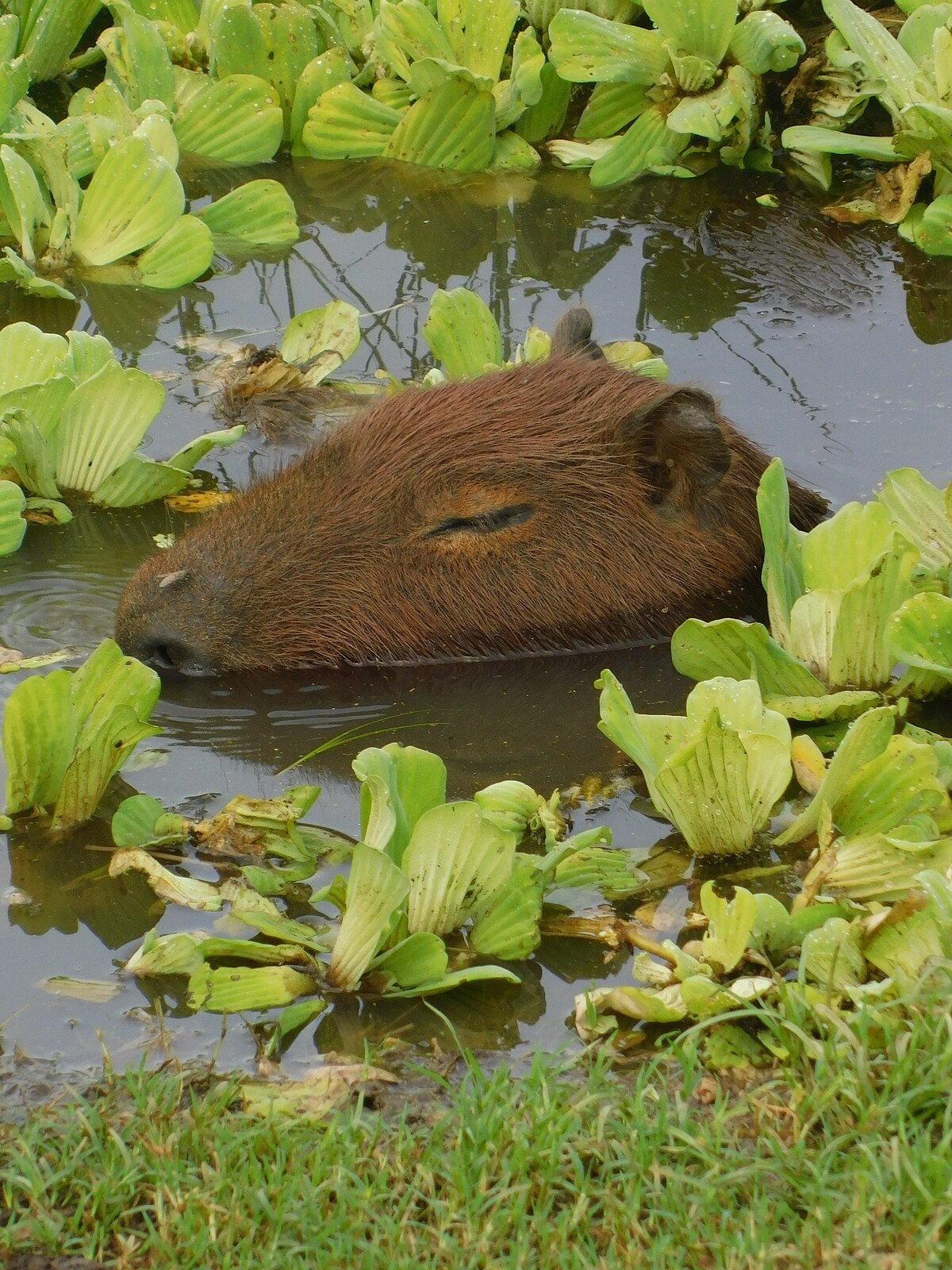
The Social Intelligence of Capybaras: What Research Tells Us
New studies from the University of São Paulo reveal that capybaras have complex social hierarchies and can recognize over 40 individual group members.
When we think of animal intelligence, we tend to focus on the usual suspects: primates, corvids, cetaceans, octopuses. Rodents rarely make the list — and when they do, it's usually rats running mazes in psychology labs. But a growing body of research suggests that capybaras possess a form of social intelligence that rivals many better-studied species.
Individual Recognition at Scale
A 2025 study published in Animal Cognition by Dr. Marcos Ferreira and colleagues at the University of São Paulo demonstrated that capybaras can reliably distinguish between at least 40 individual group members using a combination of vocalizations, scent, and visual cues. The researchers used playback experiments, presenting capybaras with recorded calls from known group members, known non-group members, and strangers.
The results were striking. Capybaras showed dramatically different physiological responses — measured via heart rate monitors and behavioral scoring — to calls from group members versus strangers. More remarkably, they showed differentiated responses to different group members, suggesting not just recognition but some form of individual assessment. A call from the dominant male elicited a different response than a call from a subordinate female.
Vocal Complexity
Capybaras have a surprisingly rich vocal repertoire. Researchers have catalogued at least seven distinct call types: the alarm bark (a sharp, dog-like sound), contact calls (low clicking sounds used to maintain group cohesion), infant distress calls, mating calls, threat vocalizations, appeasement sounds, and what researchers tentatively call "contentment purrs" — a low, rolling vocalization produced during grooming sessions and rest periods.
Dr. Lucia Amato, a bioacoustician at the Federal University of Minas Gerais, has been analyzing the spectral properties of capybara vocalizations and found that individual capybaras produce calls with consistent acoustic signatures — essentially vocal fingerprints. "Each capybara has a unique voice," she explained. "And other capybaras can tell them apart."
Coalition Formation
Perhaps the most sophisticated aspect of capybara social cognition is their ability to form and maintain alliances. In large groups, subordinate males will form coalitions to challenge dominant males — but only when the coalition is large enough to have a realistic chance of success. This implies an ability to assess relative fighting strength across multiple individuals, a cognitive feat known as "transitive inference."
Female capybaras engage in cooperative breeding, with multiple females nursing each other's young. But this cooperation isn't random — it's preferentially directed toward females with whom the caregiver has an existing grooming relationship. In other words, capybaras invest in reciprocal relationships and track the history of those relationships over time.
Learning and Adaptation
Capybaras in urban environments have demonstrated remarkable behavioral flexibility. Populations living in city parks in Buenos Aires, Curitiba, and São Paulo have learned to navigate traffic, recognize the sounds of specific vehicles (park maintenance trucks that sometimes distribute food), and adjust their activity patterns to avoid peak human foot traffic.
A 2024 study documented capybaras in a São Paulo park that had learned to use pedestrian crosswalks — not randomly, but specifically waiting at crossing points where vehicle traffic typically stops. Whether this represents true understanding of traffic patterns or simply learned association (this spot is safer), the behavioral flexibility it represents is noteworthy for a species that evolved in wild wetlands.
What It Means
None of this suggests that capybaras are secretly as intelligent as chimpanzees or dolphins. But it does suggest that our framework for understanding animal intelligence is incomplete. Capybaras have evolved a form of social cognition finely tuned to their ecological niche — large group living in predator-rich environments where cooperation, communication, and individual recognition are survival essentials.
As Dr. Ferreira puts it: "Intelligence isn't a single scale. It's a set of tools adapted to specific problems. Capybaras have tools we're only beginning to understand."