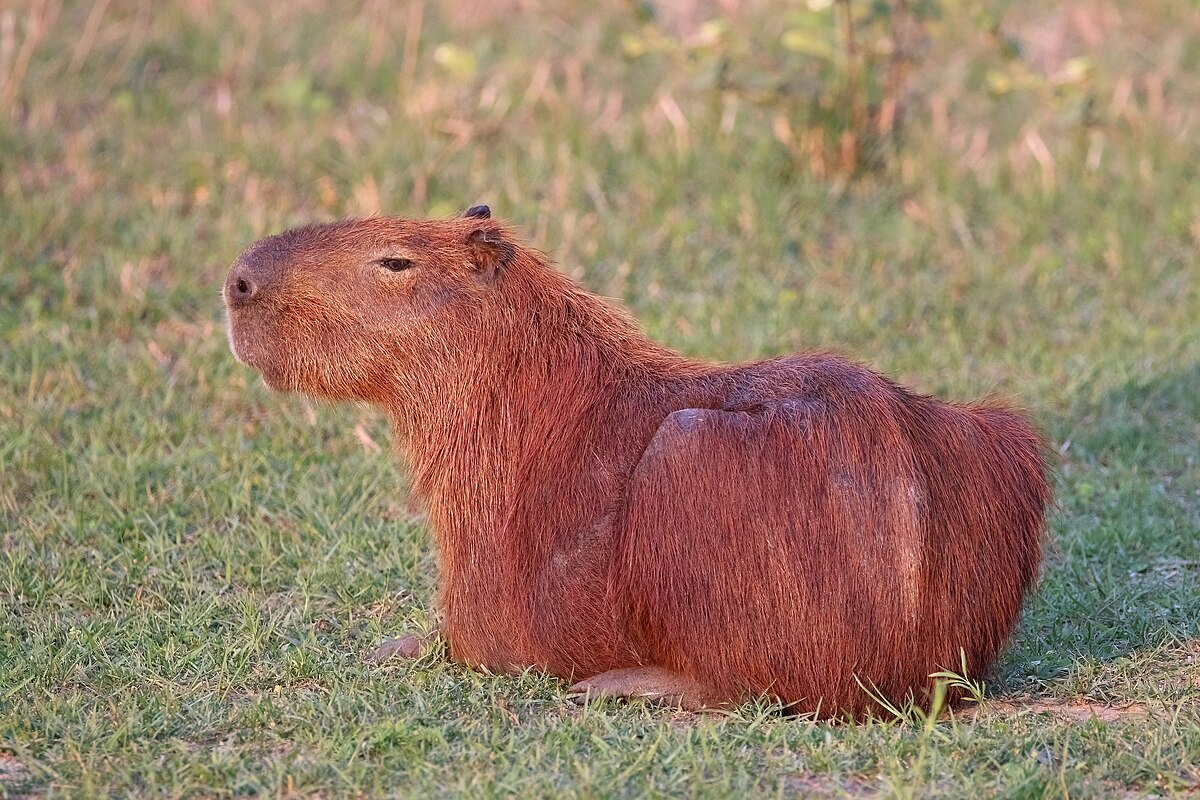
A Day in the Wetlands: Following a Capybara Family
We spent 48 hours in Brazil's Pantanal tracking a family group of 14 capybaras through their daily routines of grazing, swimming, and communal napping.
The Pantanal wetlands stretch across 150,000 square kilometers of western Brazil, forming the largest tropical wetland on Earth. It's here, where flooded grasslands meet dense gallery forests, that the capybara thrives in numbers that would astonish most visitors. Our team arrived at the Fazenda São João research station at dawn, armed with binoculars, notebooks, and enough insect repellent to last a month.
Our guide, biologist Dr. Renata Oliveira, has been studying capybara social behavior in this region for over a decade. "People think capybaras are simple animals," she told us as we loaded into the flat-bottomed boat. "But their social structure is remarkably complex. Every group has a hierarchy, alliances, and even political maneuvering."
Morning: The Grazing Hours
We found our target group — a family of 14 individuals led by a dominant male Dr. Oliveira had named "Presidente" — grazing along the marshy bank of the Paraguay River tributary. Capybaras are crepuscular grazers, meaning they prefer the cooler hours of early morning and late afternoon for feeding. In the Pantanal's brutal midday heat, they'll spend hours submerged in water with only their eyes, ears, and nostrils visible above the surface.
Presidente, identifiable by a distinctive notch in his left ear, positioned himself at the group's periphery while the females and juveniles fed closer to the water's edge. "He's standing guard," Dr. Oliveira explained. "Dominant males take on sentinel duty. If he spots a jaguar or a caiman, he'll bark — a sharp, dog-like sound — and the entire group will bolt for the water."
The grazing itself is methodical. Capybaras are selective feeders despite their reputation as living lawnmowers. They favor specific grasses — particularly Hymenachne amplexicaulis and Panicum laxum — and will walk past less palatable species to reach their preferred forage. Their teeth never stop growing, worn down by the constant processing of tough grasses and aquatic plants.
Midday: The Social Hour
By 10 a.m., the heat was oppressive. The group moved as one toward a shallow lagoon bordered by water hyacinths. What followed was one of the most charming displays of animal behavior we've ever witnessed: a full-blown capybara spa session.
The adults waded in until only their heads were visible, arranging themselves in loose clusters. The juveniles — five of them, probably born within the last three months — clambered over the adults' partially submerged backs, sliding into the water and scrambling back up in an endless loop of play. A cattle tyrant bird landed on Presidente's head and began picking insects from around his ears. He didn't flinch.
"This is mutual grooming time," said Dr. Oliveira. "Watch the females." Two adult females were positioned side by side, and we could see one gently nibbling the other's neck and shoulder area. "That's allogrooming — social bonding through grooming. The females who groom each other most frequently also cooperate in raising each other's young. It's reciprocal altruism in action."
Afternoon: Unexpected Drama
Around 3 p.m., the peace was shattered. A younger male — a challenger Dr. Oliveira called "Sombra" — approached from the far side of the lagoon. Presidente's reaction was immediate: he raised himself to full height in the water, lifted his head to expose the dark, oily morillo gland on his snout, and began a series of deep, resonant clicks.
The standoff lasted nearly twenty minutes. Sombra eventually circled away, but not before both males had engaged in a display of jaw-clacking and parallel walking that looked remarkably like a ritualized duel. "Sombra has been testing Presidente for months," Dr. Oliveira noted. "Eventually he'll either win or leave to form his own group. That's how capybara society works — it's competitive, but rarely violent."
Evening: Return to the Banks
As the sun dropped toward the horizon, the group emerged and resumed grazing. The juveniles, seemingly inexhaustible, raced through the shallows in a game that looked indistinguishable from tag. The adults fed steadily, building the reserves they'd need for the cooler night hours when they'd rest in a tight cluster on the bank, bodies pressed together for warmth and safety.
Watching them settle in as darkness fell, it was easy to understand why capybaras have captured the world's imagination. There's something profoundly calming about an animal that has solved the problem of social living so thoroughly — communal parenting, shared vigilance, ritualized conflict resolution, and an apparently genuine enjoyment of each other's company. In a world that often feels fractured, the capybara offers a quiet counter-argument.